SKYWATCHING
How to read Saturn near a full Moon
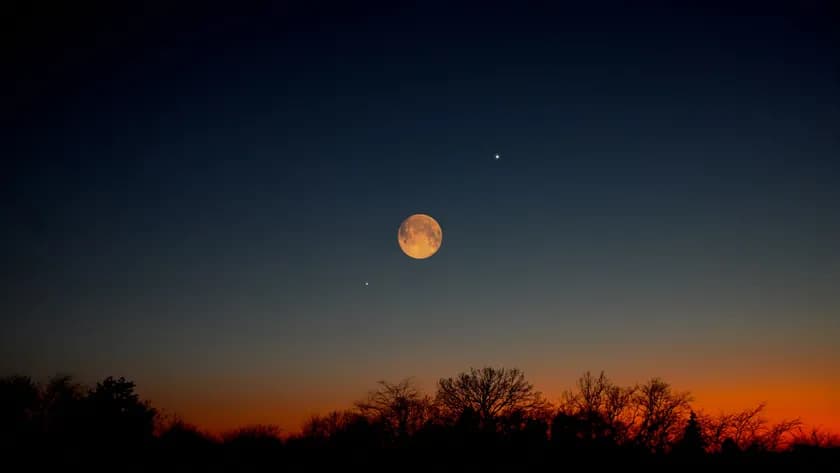
A full Moon can wash out faint stars, but it also gives observers a bright landmark for locating Saturn and comparing a planet's steady light with the Moon's changing surface detail.
What the evidence actually shows
Saturn is bright enough to remain visible in moderate moonlight. A small telescope can separate its disk from the surrounding star field, while higher magnification may reveal the ring system and Titan under steady atmospheric conditions.
Why this matters
The useful lesson is not a single calendar date. It is to start with a conspicuous anchor, let your eyes adapt away from direct glare, and then move to a darker patch of sky before searching for fainter targets.
“A bright sky can still teach you how to navigate the sky.”
Observer's field note
- ▸Use the Moon as a locator, not as the darkest observing background.
- ▸Let optics cool and keep magnification moderate when the air is turbulent.
- ▸Record the time, location, and sky conditions with every observation.
Source and method notes▼
Sources
- NASA Science— NASA observing guidance for the Moon and planets.
Article by
ViewGalaxies Research Desk
Establish Telemetry Link
Receive raw telemetry, mission updates, and deep sky discoveries delivered directly to your terminal.