OCEAN WORLDS
Enceladus turns a small moon into an ocean-world laboratory
BY ViewGalaxies Research DeskARCHIVE RECORDArchive read
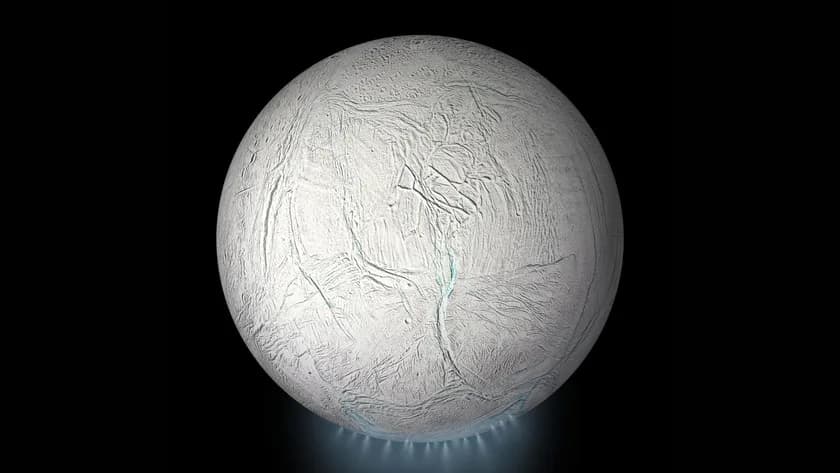
Cassini found water-rich plumes, salts, organics, and evidence of a global ocean beneath Enceladus's icy crust.
What the evidence actually shows
Cassini flew through the plume and detected water vapour, ice particles, gases, organic material, and silica-related evidence consistent with water-rock interaction. None of those measurements alone identifies biology.

Why this matters
Enceladus is compelling because an internal ocean is exposed to remote instruments. A future mission could test habitability by measuring the plume with instruments designed for organics and possible biosignatures.
“The plume is an open sample port into a hidden ocean.”
What makes an ocean world interesting
- ▸Liquid water or water-rock chemistry.
- ▸An energy source beyond sunlight.
- ▸Organic chemistry.
- ▸A reachable sample or plume.
Source and method notes▼
//Primary source: NASA Science.
//ViewGalaxies separates reported measurements from editorial interpretation.
//No claim in this record should be read as evidence of life unless the cited source explicitly says so.
Sources
- NASA Science— Cassini observations of Enceladus' plume, ocean, chemistry, and E ring connection.
Article by
ViewGalaxies Research Desk
Secure Channel
Establish Telemetry Link
Receive raw telemetry, mission updates, and deep sky discoveries delivered directly to your terminal.